
Les Arcs road conditions & cams
Roads to Les Arcs
Les Arcs road conditions: At some point, most Les Arcs trips involve a stretch of mountain road. Whether you’re driving all the way from home, hiring a car from the airport or riding up in a transfer bus, winter weather can have a big impact on how long the journey takes. Of course, the big exception to this is to travel by train to Bourg and take the funiculaire up to Arc 1600. Going by train can be a major timesaver and stops you getting stuck in valley traffic – especially when combined with the funiculaire.
This page pulls together the most useful tools for checking Les Arcs road conditions before you travel. Use the live traffic webcams to see what the roads actually look like, then check the official congestion forecasts to work out the best time to arrive. If things look tricky, you can always leave the car in the valley at Bourg and come up by bus or funiculaire.
Affiliations: La Plagne 360 works with trusted, industry-leading suppliers to bring you the best services for your trip. If you click on these links, we may earn a small commission at no extra cost to you. In most cases, you’ll also benefit from a better deal. We only feature products and services we’ve used and genuinely recommend.
Sort your Les Arcs hire before you travel
Quick tip: La Plagne and Les Arcs make up Paradiski – one of the biggest ski areas in the world. On busy weeks, hire shops fill up fast and queues build quickly. Booking ski or snowboard hire in advance means your equipment is ready, sizes are available, and you get discounted online rental prices. These pages focus more on La Plagne hire but the forms have dropdowns so you can select your Les Arcs resort.
Choose a shop close to your accommodation so your first morning is simple.
Prefer to go straight to Skiset? Book here
Les Arcs traffic webcams
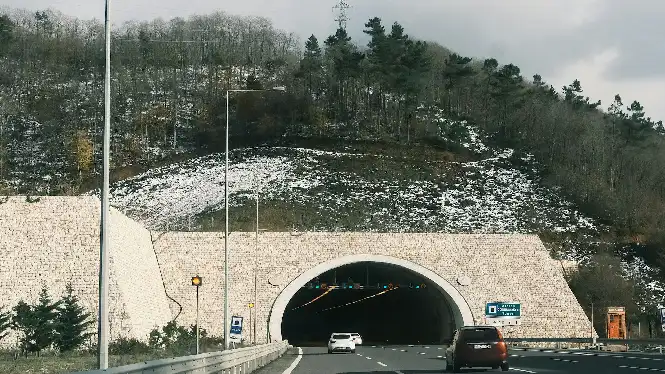
Traffic webcams in the Les Arcs area: To see real road conditions in and around La Plagne and Les Arcs, start with the official French traffic webcams. These cover key points on the approach roads including Albertville, Moûtiers, Aime and Bourg Saint Maurice and are updated in real time.
They’re ideal for checking how much snow is on the road, whether traffic is moving well and what the visibility is like further up the valley.
Heading to Les Arcs? Make sure you’re covered
Quick tip: Even on marked pistes, accidents happen. In France, rescue and evacuation costs can be charged to you. Proper ski insurance covers lift evacuation, medical care and cancellation if something goes wrong.
If you haven’t arranged cover yet, it’s worth sorting before your trip.

Les Arcs roads & congestion
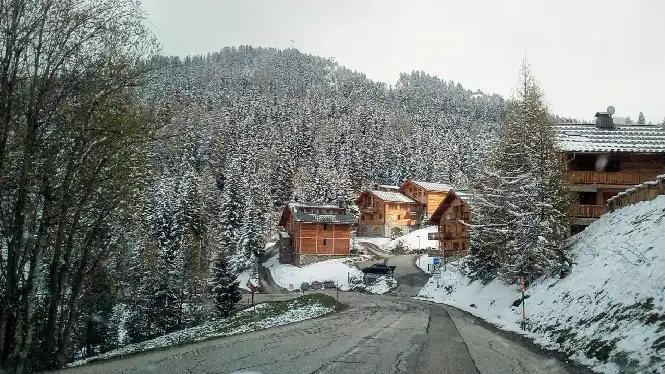
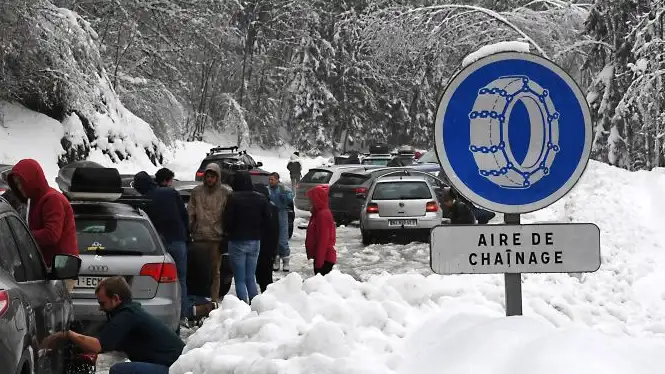
Les Arcs transfer/driving road conditions: There are no fixed rules for congestion but, as you would expect, roads are busier during school holidays and on snowy changeover days. Drivers taking too long to fit snow chains can quickly create long queues on steeper sections of the climb.
To help you plan around the busiest days, Les Arcs publishes a simple traffic forecast for key routes. It’s a handy way to see in advance when the access roads are expected to be busiest and when conditions should be easier.
Valley buses to Les Arcs
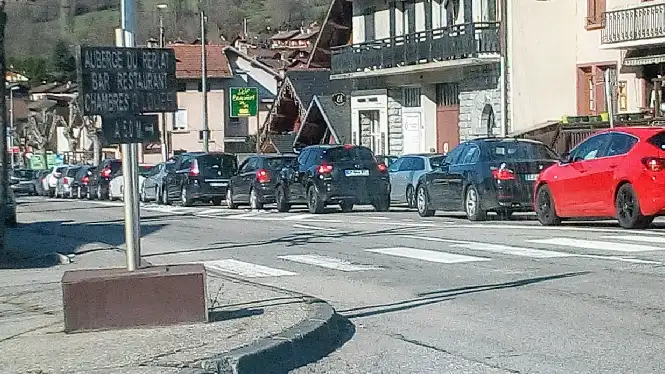
Buses and taxis from the valley to Les Arcs: If you don’t fancy the last part of the drive, you can always leave the car in the valley and continue by funiculaire, bus or taxi. Regular bus services run from Bourg-St-Maurice gare routière (train and bus station) to the main Les Arcs villages – plus the funiculaire runs all day. This is especially useful if you arrive by train.
Swapping the final climb for the funiculaire or bus transfer can be a calmer option on heavy snow days or at the end of a long journey.
Take the train to Bourg
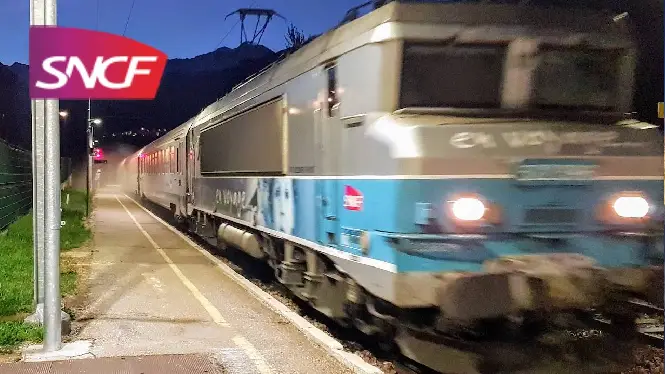
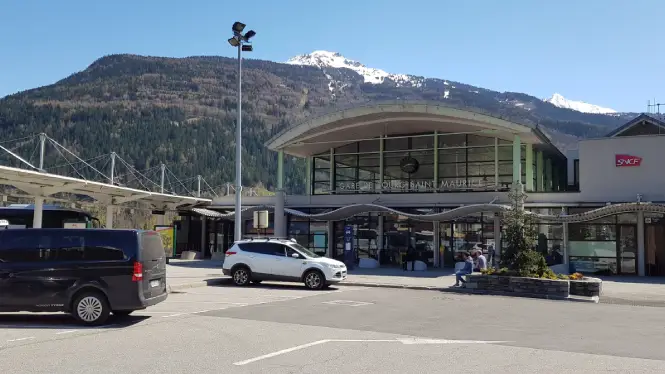
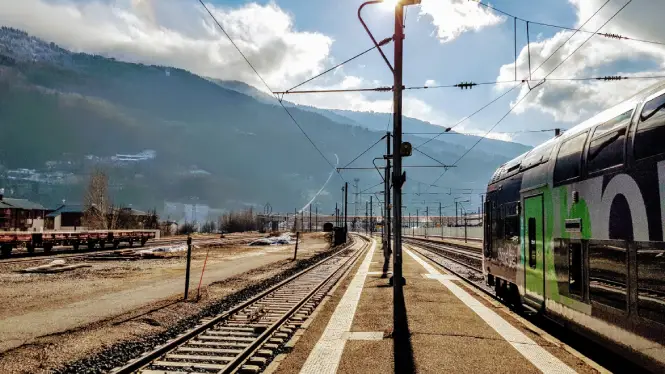
Taking the train to Les Arcs: Because Les Arcs is connected to Bourg-St-Maurice via the funiculaire, you’ll often find the quickest option is to arrive by train. This route negates road traffic and gives direct access from Geneva airport > Geneva main train station (Cornavin) > Bourg-St-Maurice > funiculaire to Arc 1600 > free inter-resort shuttle bus to your resort.
While this might seem more convoluted than just a direct transfer, it’s very often quicker – and cheaper. Plus you’ll win Thunberg points for your eco-friendliness.
Links:
Detailed guide for La Plagne by train (it’s the same for Les Arcs – you just stay on a couple more stops)
Schedules and booking for Les Arcs by train
The funiculaire to Les Arcs
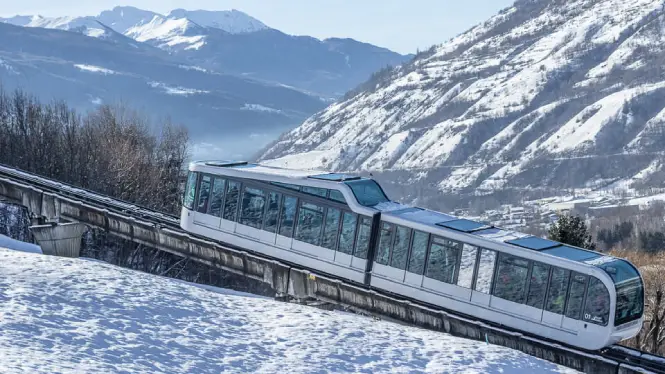
Les Arcs funiculaire to Arc 1600: Les Arcs is gifted with the funiculaire which runs from right next to the train station, direct up to Arc 1600. This can be a major time (and money) saver – especially if you’re arriving by train. While there’s also a regular bus service, the funiculaire is a much greener option – and much cheaper too (it’s included on most lift passes).
Trains run every 20 minutes approximately from 07.30 to 21.00 daily. The trip takes an average of 7 minutes from base to Arc 1600. From there you can link into Les Arcs’ regular inter-resort shuttle bus network to reach all the major villages – 1600, 1800, 1950, 2000 and Peisey-Vallandry. Use the link below to ensure the funiculaire is running.
Links:
Les Arcs lift and piste conditions
Les Arcs funiculaire timetable
When are roads busiest?
When are Les Arcs roads busiest: Road conditions change a lot through the season. Early winter can bring fresh snow and colder temperatures, while spring usually means clearer roads but more traffic at peak holiday times.
For a better feel of what to expect in each month, take a look at the resort guides from La Plagne. They cover typical snow levels, busy weeks and general travel tips for driving, transfers and train journeys throughout the season. Yes, these are written from the perspective of La Plagne but they are, for all intents and purposes, pretty much the same for both resorts due to the proximity (and the fact they make up Paradiski).
Links:
La Plagne in December,
La Plagne in January,
La Plagne in February,
La Plagne in March,
La Plagne in April
Or see the summary: When is the best time to ski in La Plagne
Plan your trip
More Les Arcs travel resources: These partners help with booking, transfers and kit hire. We may earn a commission if you use them – at no extra cost to you.
Les Arcs ski hire
Follow the panel link to find hire in other Les Arcs Villages