
What is a mer du nuages?
A brief guide to the sea of clouds
If you’ve spent any time skiing or snowboarding in the French Alps, or even in other mountain areas including Scotland, you’ve probably come across the slightly peculiar phenomenon known in France as a mer du nuages — literally, a sea of clouds.
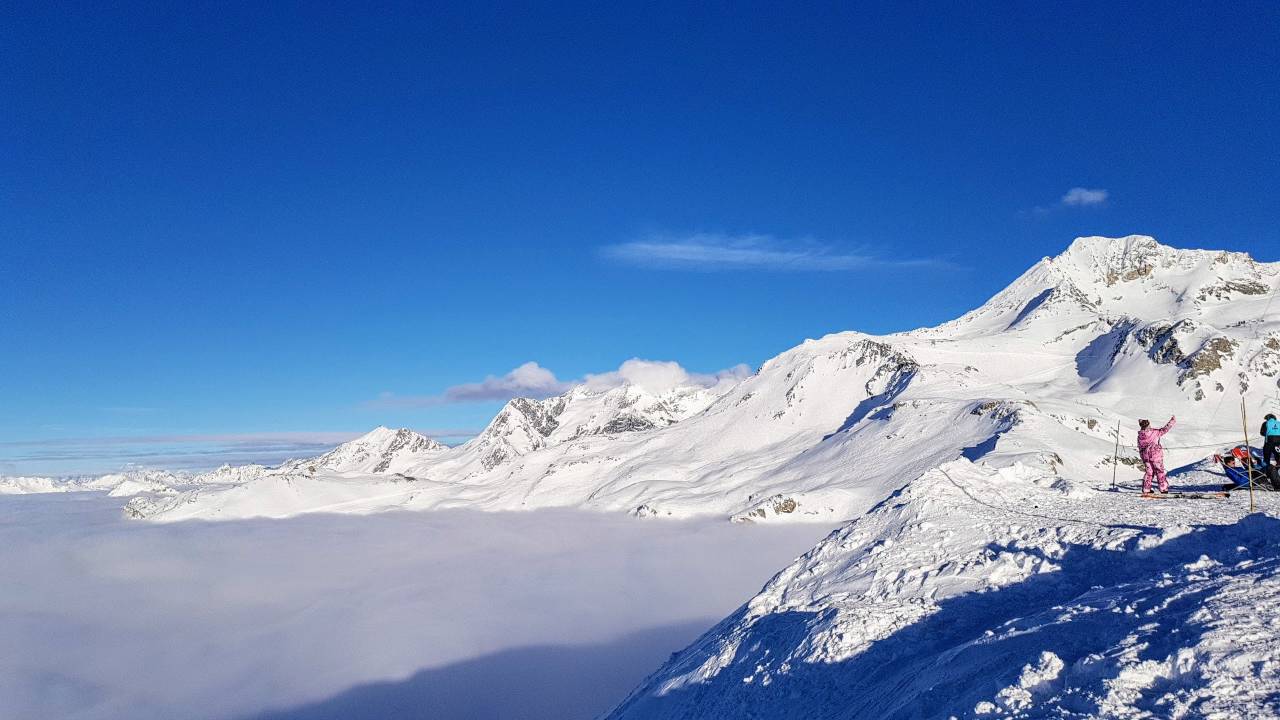
The image opposite was taken from Roche de Mio above Plagne Bellecôte and Belle Plagne, with the Bellecôte glacier pistes glowing in the sun while the cloud layer laps against the lower slopes.
Affiliations: La Plagne 360 works with trusted, industry-leading suppliers to bring you the best services for your trip. If you click on these links, we may earn a small commission at no extra cost to you. In most cases, you’ll also benefit from a better deal. We only feature products and services we’ve used and genuinely recommend.
Sort your La Plagne hire before you travel
Quick tip: La Plagne is one of the biggest ski areas in the world. On busy weeks, hire shops fill up fast and queues build quickly. Booking ski or snowboard hire in advance means your equipment is ready, sizes are available and you get rental prices that are cheaper online.
Choose a shop close to your accommodation so your first morning is simple.
Prefer to go straight to Skiset? Book here
What causes a mer du nuages?
In simple terms, a mer du nuages means the valleys are buried under a layer of cloud while the higher slopes and summits sit in bright sunshine above. It can be wet, gloomy and cold down low yet calm, warm and beautiful higher up.
A mer du nuages usually needs a couple of things to come together. First, you often get anticyclonic high pressure, which tends to mean settled weather and very little wind. Then you get a temperature inversion, where colder air becomes trapped in the valleys while milder air sits above.
If there is enough moisture in that colder valley air, it slowly forms a cloud layer somewhere between the valley floor and the mountain tops. That is why it can be raining or snowing below while the upper mountain is sunny.
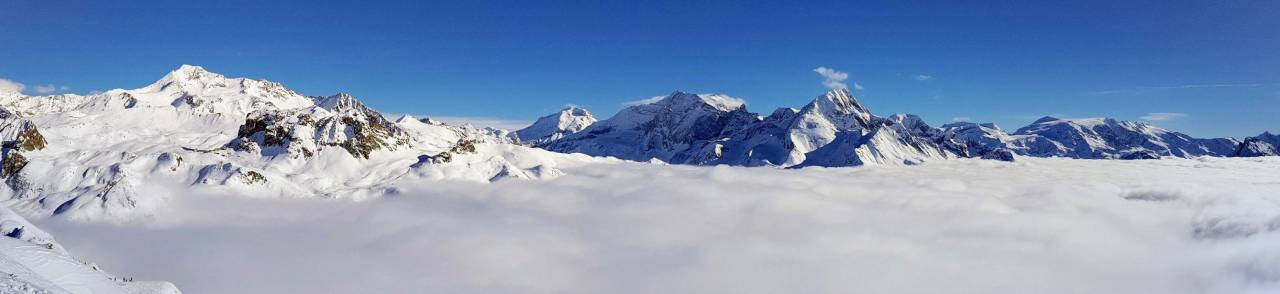
The photo opposite shows classic conditions above the Champagny sector of La Plagne, with the cloud stretching right across towards the peaks of the Trois Vallées.
Calm air lets it build and linger
In winter, the sun often is not strong enough to burn the moisture away quickly. So once the cloud layer forms, it can continue to build rather than clear.
If the high pressure sticks around and there is still very little wind, a mer du nuages can last for several days before it finally breaks down. That is one of the reasons it can look so dramatic in ski resorts: the same cloud sea sits below you day after day while the upper mountain stays bright.
This is also why the conditions you see outside your accommodation window can be very misleading. A murky valley morning does not always mean a poor ski day higher up.
Heading to La Plagne? Make sure you’re covered
Quick tip: Even on marked pistes, accidents happen. In France, rescue and evacuation costs can be charged to you. Proper ski insurance covers lift evacuation, medical care and cancellation if something goes wrong.
If you haven’t arranged cover yet, it’s worth sorting before your trip.

Don’t let the valley view fool you
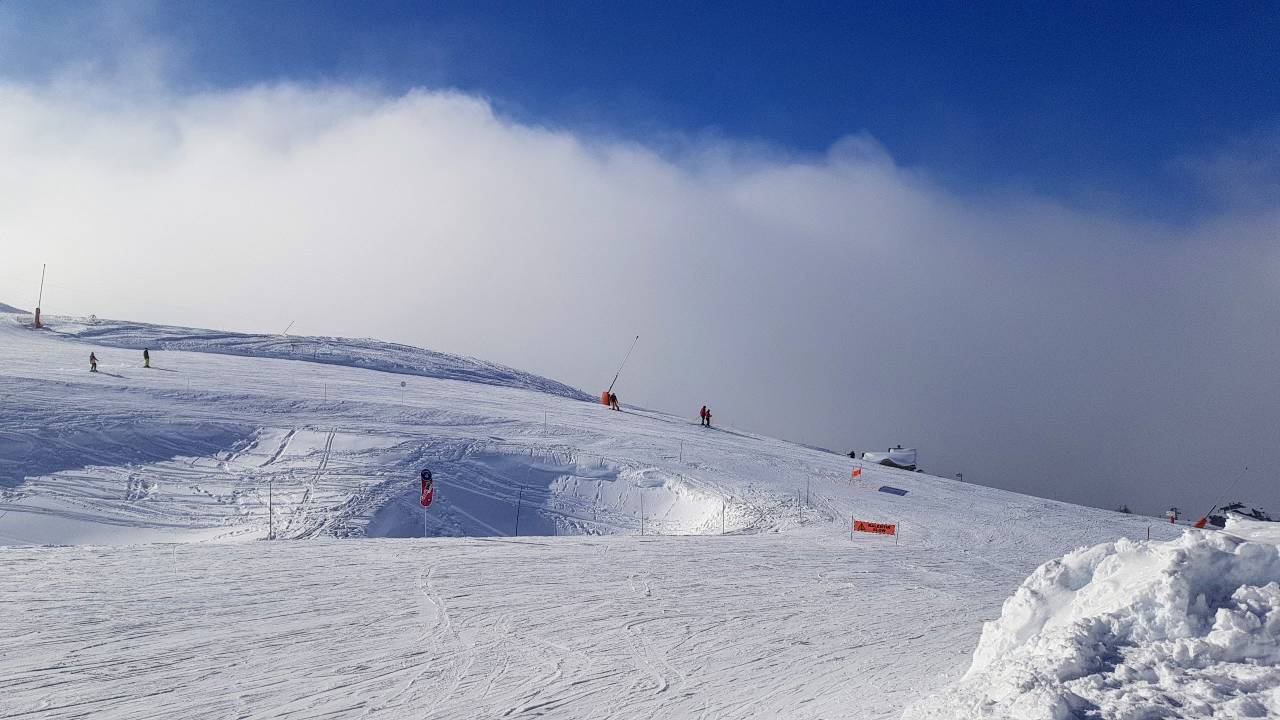
The big lesson with a mer du nuages is that it can be surprisingly deceptive. You might pull back the curtains in your accommodation and see drizzle, flat light or thick cloud and assume the whole mountain is a write-off.
Often, that is not the case at all. There is every chance the conditions are far better higher up, especially around the upper lifts and glacier sectors.
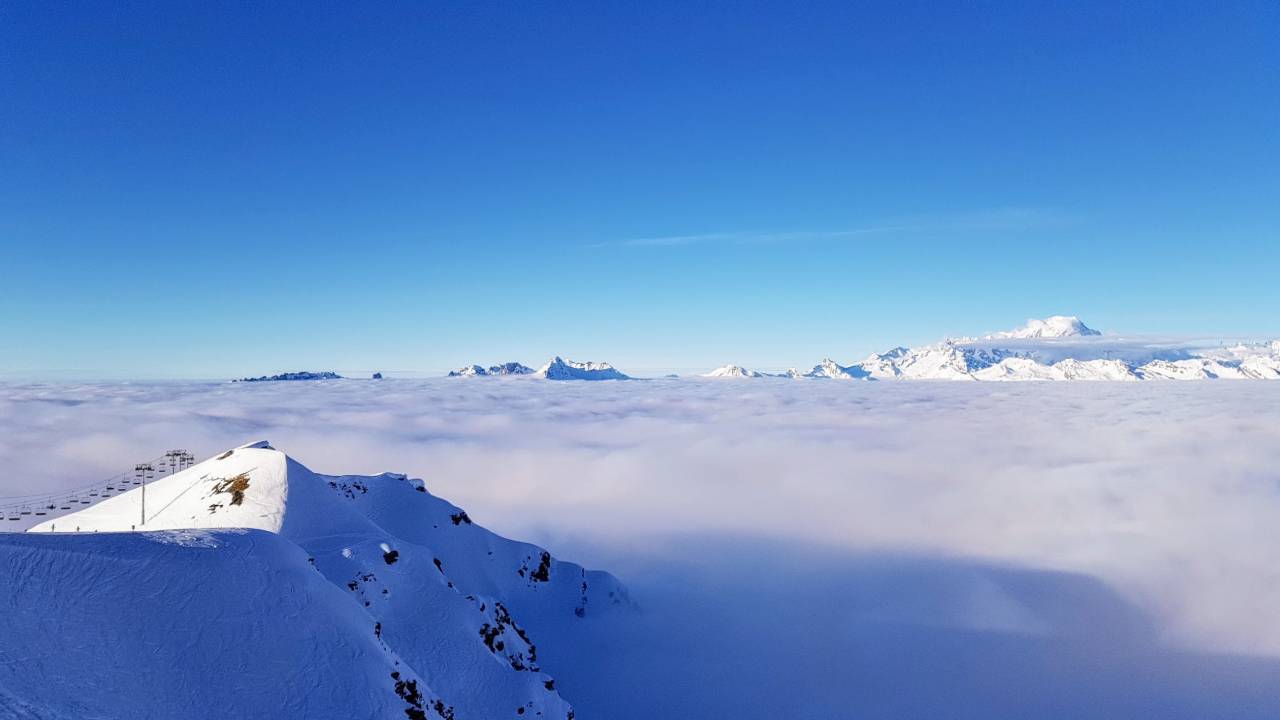
The image opposite shows the boundary level of the cloud sitting just above Plagne Centre, Plagne Villages and Plagne Soleil, close to the Colosses detachable chairlift.
Check altitude webcams and the forecast
So what should you do when you wake up to a grim-looking morning in resort? Don’t just throw in the towel.
First, check the La Plagne webcams, especially the higher cameras. Then compare that with the La Plagne weather forecast. Between the two, you can usually work out very quickly whether the cloud is sitting low and whether the upper mountain is likely to be clear.
On days with a mer du nuages, that simple check can make the difference between missing a brilliant sunny session above the cloud and staying down in the gloom.
Other useful La Plagne guides
If you’d like to work out what conditions are doing around the mountain before you head out, these guides are a good place to start:
Weather and visibility
Places mentioned in this guide
Our YouTube channel
To get a better feel for visibility, weather and terrain in La Plagne before you head out, take a look at the iRide YouTube channel. You’ll find piste rides, village tours, snow reports and travel guides filmed throughout La Plagne and the wider Paradiski area.
Want more practical La Plagne info?
If you want more useful info in your feed, follow our Facebook updates:
- Snow and visibility updates when conditions change
- Travel warnings on busy weekends
- New guide drops as we build out the site
Plan your trip
Planning your trip? These partners help with booking, transfers and kit hire. We may earn a commission if you use them – at no extra cost to you.
La Plagne ski hire
La Plagne Geneva flights
More La Plagne flights