
Where are the quietest areas in La Plagne?
A massive ski area, but queues still form
As the world’s 3rd-largest ski area, La Plagne has around 225km of pistes locally, with that almost doubling to 425km when you include Les Arcs as the second half of Paradiski.
That kind of scale means you can almost always find quieter terrain if you know where to look. The issue is that the busiest areas sit around the biggest villages and the main “hub lifts” which most people default to.
Affiliations: La Plagne 360 works with trusted, industry-leading suppliers to bring you the best services for your trip. If you click on these links, we may earn a small commission at no extra cost to you. In most cases, you’ll also benefit from a better deal. We only feature products and services we’ve used and genuinely recommend.
Quiet areas in La Plagne: the short version
In general, the front of the mountain near the biggest villages gets the most traffic, plus the most ski schools and the most queues. To find quieter riding, the trick is to either move to the edges of the map, or ride terrain that doesn’t suit the average holiday crowd. Check the 3D map video to get a better idea of the areas referenced below.
- Quietest sectors most weeks: Champagny and Montalbert
- Often quieter with big terrain: Montchavin (except key funnels like Mont Blanc)
- Can be quiet if you’re capable: higher red and black terrain, including the Glacier area
- Busy hubs to avoid when it’s rammed: Plagne Centre bowl, Plagne Bellecôte bowl, main base connection lifts
If you’re travelling in peak periods, this guide is worth pairing with: quietest times to visit La Plagne, plus these practical tips: how to make the best of La Plagne when it’s busy.
Quick jump menu
> Champagny
> The Glacier
> Aime 2000 (Biolley)
> Bellecôte / Belle Plagne
> Plagne Centre (Grande Rochette)
> Montalbert
> Montchavin
> The unavoidable hub lifts
> Best of La Plagne in a day
> Best blue pistes (and when to avoid)
> La Plagne video guides
Quieter routes are easier with the right kit
Quick tip: A lot of “busy resort stress” can actually be down to gear stress. Boots that hurt, skis that don’t bite, snowboards that are too long or too heavy. Sort hire early so you’ve got better sizing, better choice and less messing around on arrival.
Use the link below or go straight to Skiset: book here.
Champagny: often the quietest side of La Plagne
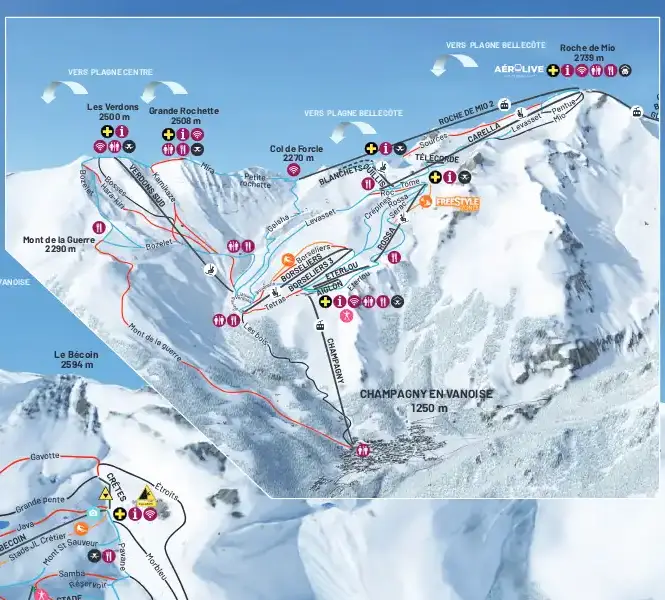
The Champagny pistes tend to be some of the quietest across the whole area. Partly because they’re wide and spread traffic, but also because many beginner and intermediate riders don’t think to venture over this side.
The main exception is the long Levasset blue, which can suffer from crowds as one of La Plagne’s best combination routes. It’s also one of La Plagne’s longest runs, so it can be popular at any time of day.
If you want a route to discover the best of this area, start here: best blue runs in Champagny.
The Glacier: quiet because it’s mostly red and black
Apart from the short Frêtes blue, the Glacier pistes are all red and black, so they tend to stay quieter than the main intermediate motorway runs.
The Télécabine des Glaciers access lift can get busy, partly due to pedestrians heading up for sightseeing. However, if you time it right, the riding up there can feel properly empty. A good litmus test is to check the gondola queue to assess how many people are carrying skis or snowboards.
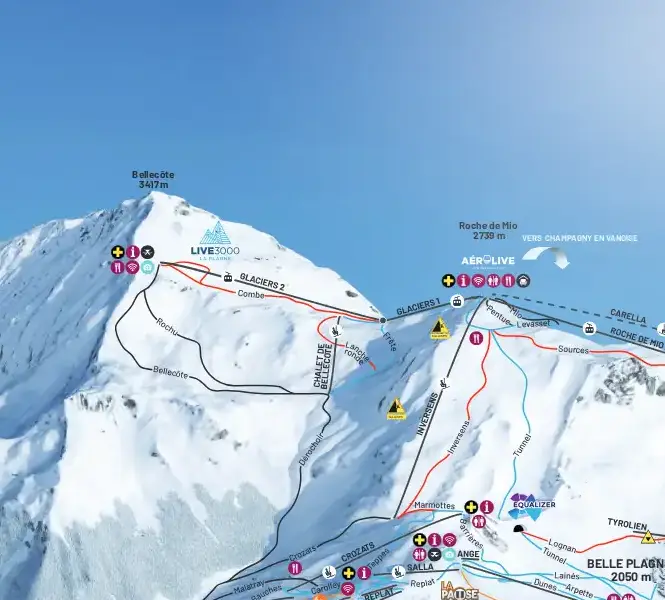
Aime 2000 (Biolley): go red, go quieter
The best way to avoid crowds around Aime 2000 / Biolley is to head for less popular red pistes like Emile Allais or André Martzolf. Both these runs are frequently deserted.
The pistes around the Golf chair are frequently used by ski schools, so they can be busier, as can other lower-level lifts in this area. If you want to dodge those queues (and you have the ability), ride the longer runs in the direction of La Roche and take the faster Envers (midway) or Roche chairs to get back up.
You’ll also often find the runs back to Plagne 1800 (Jean Marie and Lovatière) are very quiet – although these really are more return runs for people staying in 1800.
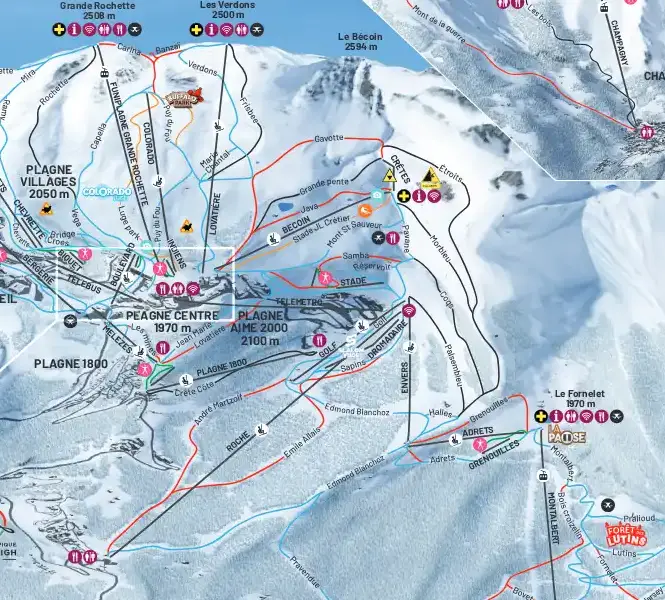
Bellecôte / Belle Plagne: busy lifts, higher runs quieter
As a hub to reach other areas, the lifts and pistes in the Bellecôte area can get very busy. In particular, the runs off the Arpette chairlift can get super busy – plus the chair itself is always ranked busiest in La Plagne (along with the Bergerie).
Arpette is also the main route into Montchavin and Les Arcs beyond, so there’s often extra traffic. If you’ve got the skills, the quietest runs in this sector are the Bellecôte red pistes, which also sit higher for better conditions.
Heads-up: the steep sections near the end of Sources red often have beginners struggling. Expect to find lower-level riders stopped in awkward places.
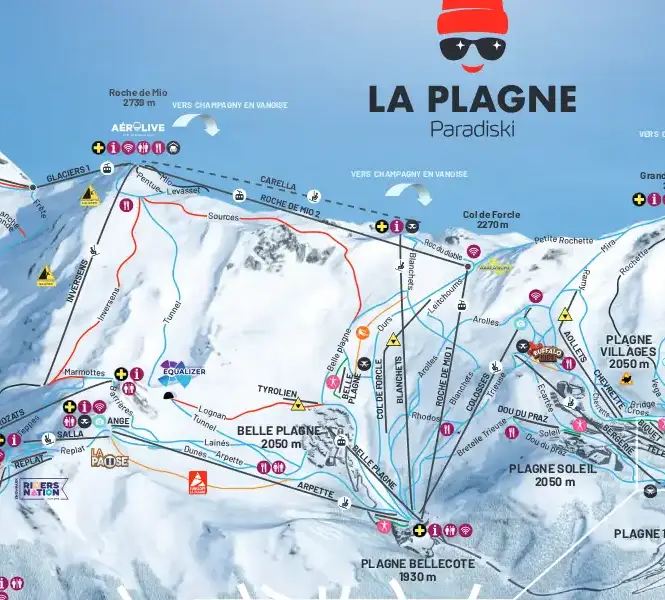
Plagne Centre: often rammed in peak weeks
Similar to Bellecôte, the Plagne Centre area can get extremely busy. Apart from the blacks like Frisbee and Rochette, most runs here can get crowded fast. Note: technically, this area (previously called Grande Rochette) also encompasses Plagne Soleil and Plagne Villages.
It’s made worse by the lower pistes narrowing, which makes everything feel more cramped. In busy weeks, it’s often best to avoid most of this sector if you can, especially the obvious chairlifts and ski school favourites. In particular, the Colorado chair is hugely popular with ski schools so is one to avoid if you can. You’re almost always quicker taking the Funiplagne instead.
Another major lift to avoid in this area is the Bergerie chair between Plagne Soleil and Plagne Villages. Along with the Arpette chair from Bellecôte, this chair is year on year rated as La Plagne’s busiest.
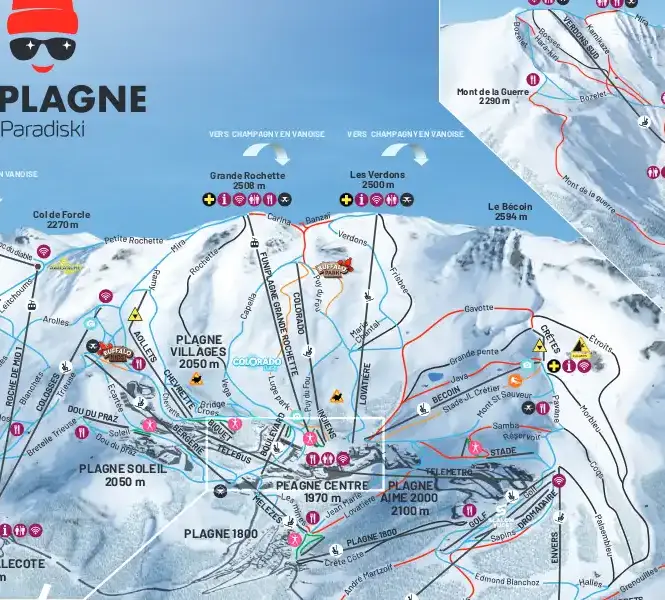
Montalbert: one of the quietest areas in La Plagne
Along with Champagny, the Montalbert sector is usually the quietest area in La Plagne.
Because it’s remote on the far right of the La Plagne piste map – and most of La Plagne’s demographic is beginner or early intermediate – the majority of people tend to stay closer to the central villages and avoid this area. The busiest parts are usually the beginner runs near the resort but, on the whole, it’s calmer than the front-facing sectors.
Insider hack: For all the reasons noted above, this area can be epic during or after fresh snow. Snow stays fresher for longer here – plus the trees give cover.
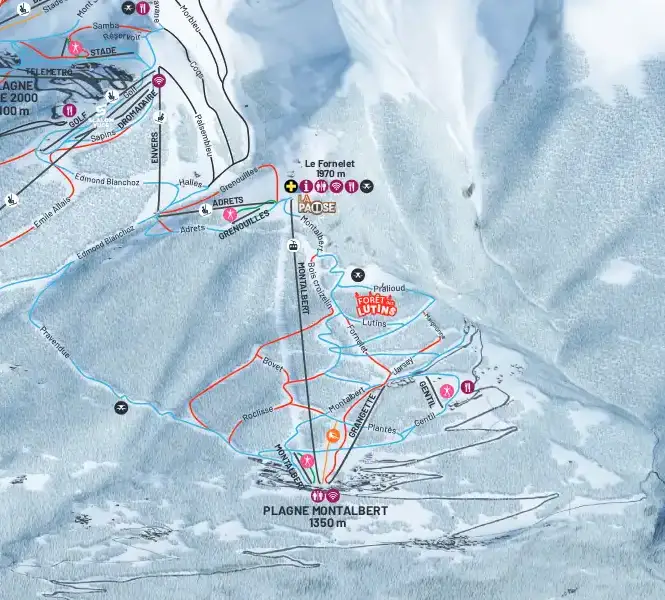
Montchavin: quieter with long runs and trees
Apart from early mornings and late afternoons, the Montchavin sector tends to be one of the quieter areas.
Because it’s the gateway to Les Arcs and back, you’ll see busy moments (especially in the mornings), but this usually dissipates as the day progresses. Montchavin’s “remote” vibe also puts off a lot of the beginner and intermediate crowd.
The exception is the Mont Blanc blue which can be busy any time of day. If it feels cramped, consider Myrtilles or Pierres Blanches, which are usually quieter and often better runs. Mont Blanc is also La Plagne’s longest run – which partly explains its popularity.
Montchavin is one of the best areas in La Plagne for easy tree riding and nearby off-piste options.
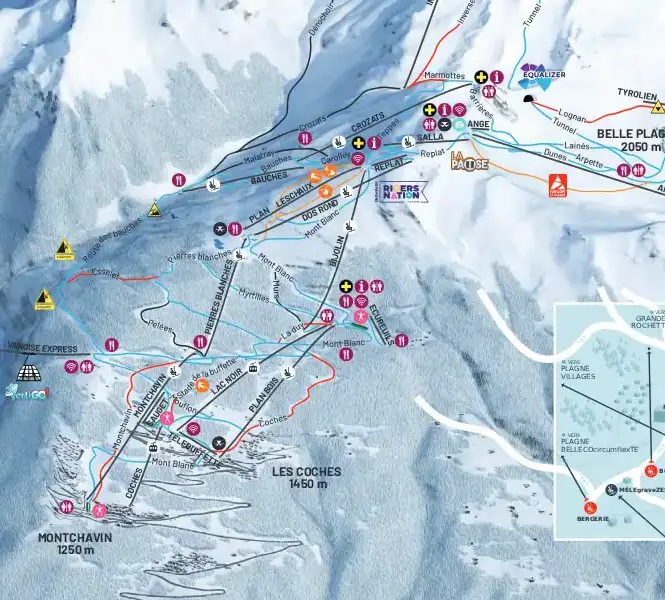
Busy weeks raise the risk of chain-reaction problems
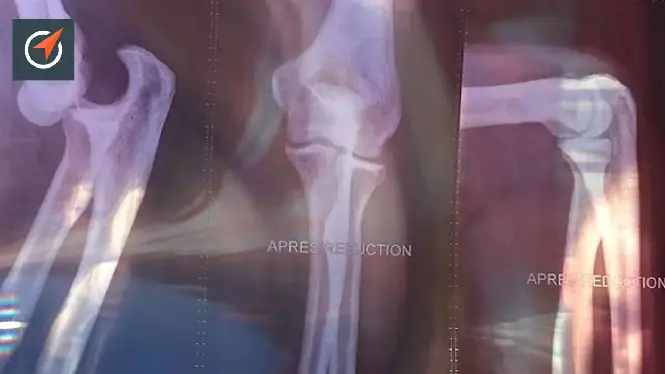
Quick tip: Peak weeks can be brilliant, but it’s also when small issues can turn into expensive ones. Injuries, lift closures, missed lessons, delayed flights, medical costs, etc. Remember – the chances of accidents increase exponentially on busy pistes (whether you’re at fault or not). Sort proper cover before you travel so you’re not stuck making stressful calls mid-trip.
The “unavoidable“ hub lifts
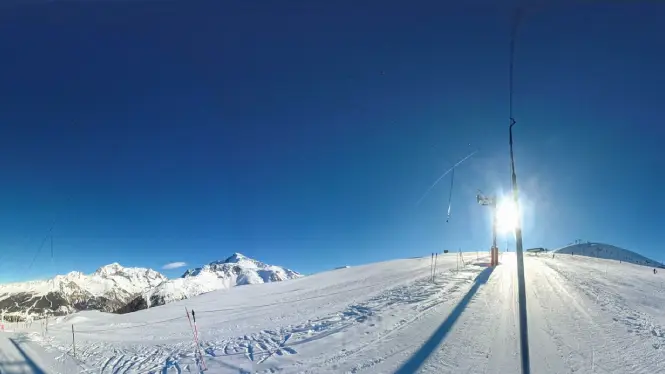
All ski resorts have hub lifts that suffer queues, especially in the morning rush. In La Plagne, the majority of the key hubs sit around the base of Plagne Villages, Plagne Soleil plus especially Plagne Centre and Plagne Bellecôte.
Busy lifts almost always translate directly into busy runs, so if the resort is rammed, you’ll want to spend less time in these are areas. The simplest move is to get out and up early, then ride away from the hubs. The video is of the Bergerie chair – perennially ranked La Plagne’s busiest lift along with the Arpette in Bellecôte.
If you want detailed alternative options, start here: La Plagne lifts to avoid.
Also, if you’re doing a season in La Plagne, this is the kind of knowledge that saves you hours over a winter.
See the best of La Plagne in a day
Want to get a handle on the quietest areas in La Plagne? Try this route which will take you round the majority of the area. La Plagne is big. Very big. Arriving here, you’ll probably be a little overwhelmed by the sheer size of the place. That’s why we designed a route to discover La Plagne’s main areas almost totally on blue runs. Watch the video and download the numbered piste map to find your way around.
The best of La Plagne in just one day on a route suitable for early intermediates and above.
Important: The Les Bois run down to Champagny was recently upgraded to black so, if you want to avoid that section, just stop at Borseliers after Levasset and take the chair up to continue the shortened route.
La Plagne’s best intermediate pistes
Because La Plagne attracts so many beginner and intermediate riders, popular blue-run routes can get cramped. They’re still brilliant, but in the busiest weeks you may want to time them early or late or pick quieter sectors based on the info above.
Best blue-run guides:
Champagny best blue pistes
Plagne Bellecôte best blue pistes
Grande Rochette best blue pistes
Biolley Aime 2000 best blue pistes
La Plagne video guides through the season
For more real-world La Plagne footage through the season, visit the iRide YouTube channel and the full La Plagne videos playlist.
If you’re planning around timing, these guides help:
La Plagne in December
La Plagne in January
La Plagne in February
La Plagne in March
La Plagne in April
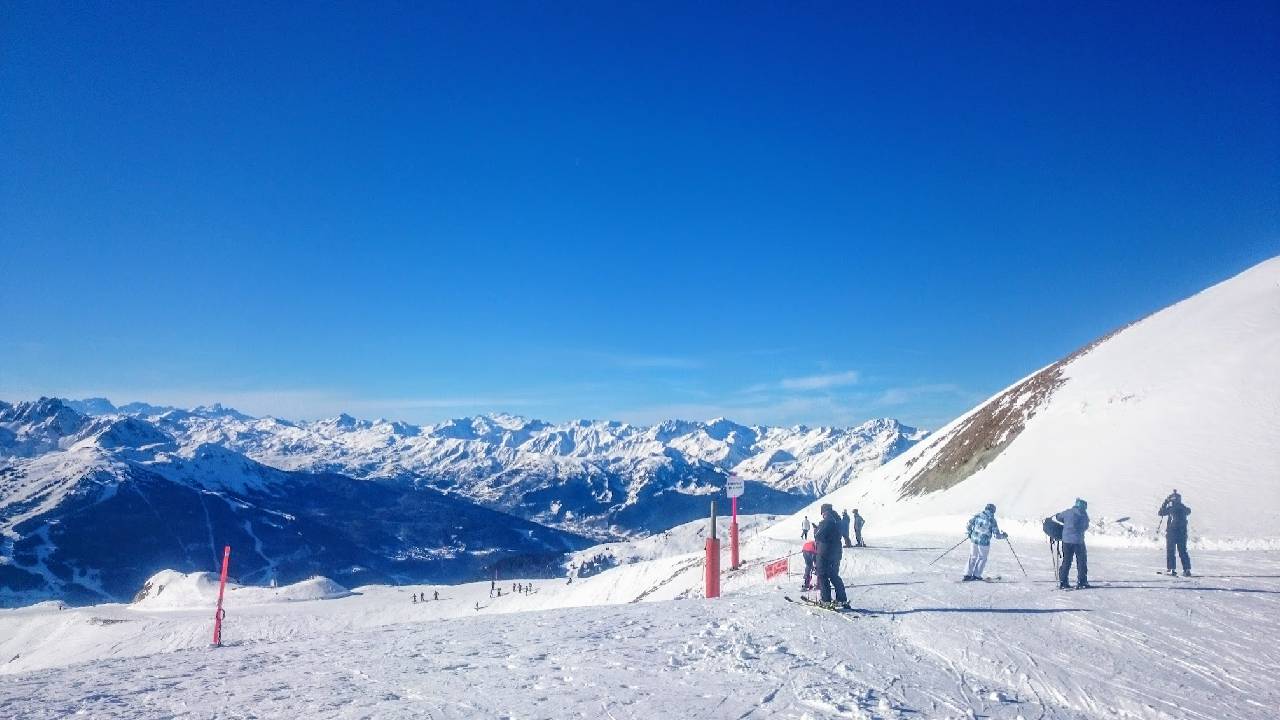
Want more practical La Plagne info?
If you want more useful info in your feed, follow our Facebook updates:
- Snow and visibility updates when conditions change
- Travel warnings on busy weekends
- New guide drops as we build out the site
Plan your trip
Planning your trip? These partners help with booking, transfers and kit hire. We may earn a commission if you use them – at no extra cost to you.
La Plagne Geneva flights
More La Plagne flights