
Where to ride when it snows in La Plagne
Snow and bad weather in La Plagne
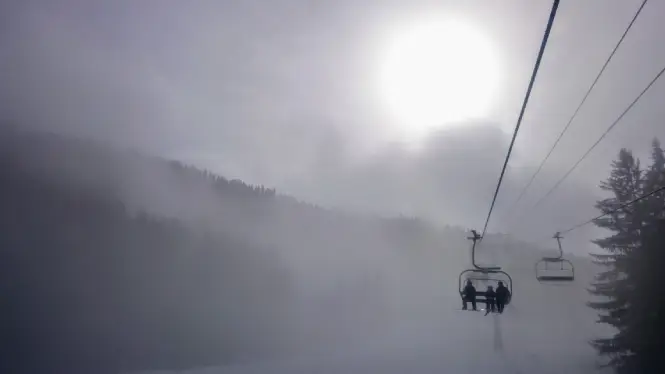
Snow and bad weather – like it or loathe it – it’s just part of any winter trip and a snowy day normally brings the best conditions once the weather clears. That said, skiing and snowboarding in blizzards and poor visibility can be a drain, particularly if you’re caught higher up where sky and piste merge into one. Read on for a practical guide on where to ride when it snows in La Plagne, plus the simple tricks that make poor visibility days far less grim.
Affiliations: La Plagne 360 works with trusted, industry-leading suppliers to bring you the best services for your trip. If you click on these links, we may earn a small commission at no extra cost to you. In most cases, you’ll also benefit from a better deal. We only feature products and services we’ve used and genuinely recommend.
Where to go when it snows in La Plagne
When the weather turns to low cloud, fog or snowfall, you almost always want to head lower. Below are the best calls, hand-picked from experience and split by sector. There are full breakdowns and advice lower down this page. However, as an overview . . .
At a glance, here’s where to go (and where to avoid). Use the jump menu for more details
Bellecôte – mostly too exposed. There are better areas in bad weather (keep reading)
Biolley / Aime 2000 – if you go here, go lower down towards La Roche
Champagny – definitely avoid. Apart from Les Bois, this area is totally exposed in a white-out
Glacier – it likely won’t be open anyway but definitely avoid
Grande Rochette / Plagne Centre – there’s some tree cover on the lower runs but that’s not enough to make this a top choice in bad weather
Montalbert – welcome to Disneyland. Montalbert shines on the darkest days
Montchavin – If Montalbert is Disneyland, this is Disneyland on steroids. Think first-class upgrade, chauffeur driver, free meals and a 5-star hotel thrown in for free. This is your go-to, top choice on bad weather days.
Planning your La Plagne trip?
Quick tip: Bad weather days are far more enjoyable with decent kit. Booking in advance means the right gear is ready, sizes are available, rental prices are usually cheaper and you don’t waste your first morning sorting it out in resort.
Use the link below or go straight to Skiset. Book here
Storm day riding in La Plagne
This clips shows what bad visibility days can look like in La Plagne and why wooded terrain makes such a difference. This was filmed around the trees in the lower Bellecôte area and in the Montchavin forest (exactly where you want to be on bad viz days).
Knowing the tricks for poor visibility days
Skiing and snowboarding are all about seeing where you’re going and being able to read the terrain beneath and in front of you.
There are few worse feelings than bouncing down a run, bumping into churn and moguls you can’t even see, then finding your knees in your face.
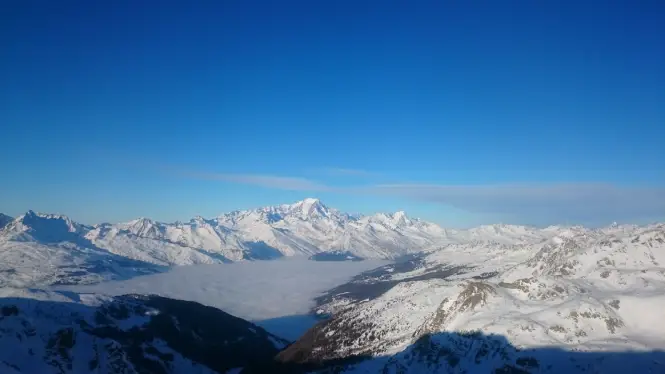
While it’s a slight generalisation, the worst conditions in bad weather are normally found higher up – mostly because definition usually reduces the higher you go. We’re back into that ‘can’t see’ territory again. Nothing worse.
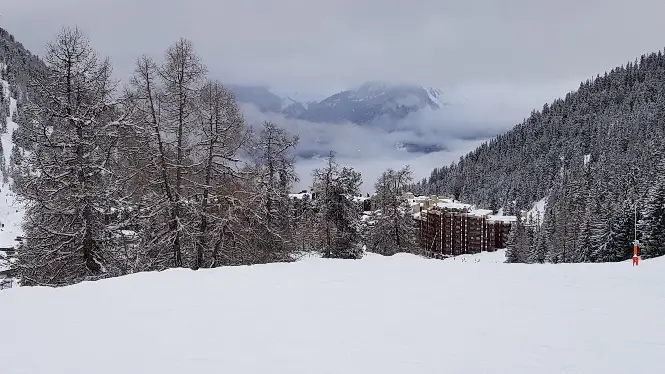
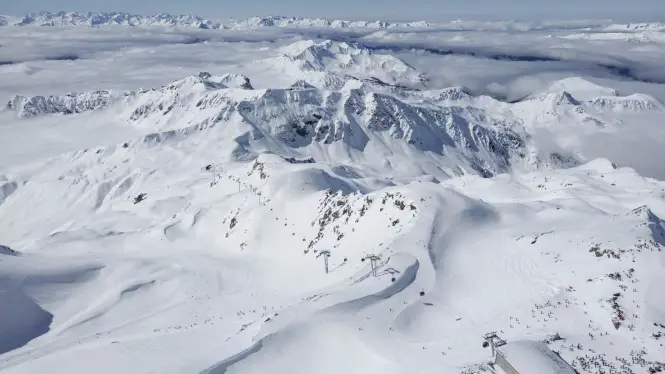
Note – a Mer du Nuages (as pictured in the image) is the exception to this rule.
In bad weather, go low
I’m slightly stereotyping with this one because conditions can vary across a resort the size of La Plagne but, as a general rule, the lower you go, the less harsh the conditions will be.
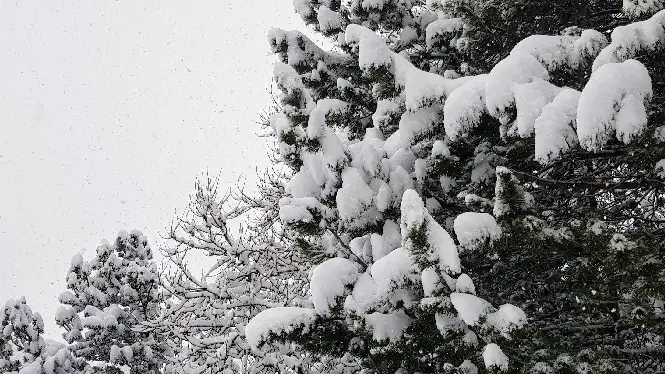
Not only will you find more protection in the valleys, as soon as you drop below the tree line you’ll also get far better definition and visibility. Trees are you friends. They break up cloud and shield you from snow. They also make riding fresh pow even more fun.
For extra detail, read: how altitude affects temperature in the mountains.
Trees are your friends
If you make the right choices, even harsh blizzard days can end up being your best. As the crowds call it a day, you can be lapping freshies on quiet lifts and deserted lines.
Trees don’t just offer protection from wind and snow. They break up cloud and whiteness, giving you far better definition. Above the tree line you often have very little to define the piste other than markers, which can turn into a slow, awkward survival run.
On foggy, snowy and flat light days, your first call should be to head for the trees.
High alpine to tree-lined valleys
La Plagne has both high alpine riding up to 3000m and, crucially, valley pistes cut into the trees. Those wooded areas are exactly where you should head when the weather closes in.
| Pros | Cons |
|---|---|
| Better definition and visibility below the tree line | Lower snow can be heavier in warm storms |
| More shelter from wind and spindrift | Tree riding needs extra care if you go off piste |
| Often quieter lifts as people bail early | If it’s raining low down, it can end the day |
Don’t wing it on storm days
Quick tip: If you’re riding storms, tree lines and variable snow, insurance matters. Sort it before you travel so you’re covered properly if something goes wrong.
Use the link below to get it done quickly.

Bellecôte in bad weather
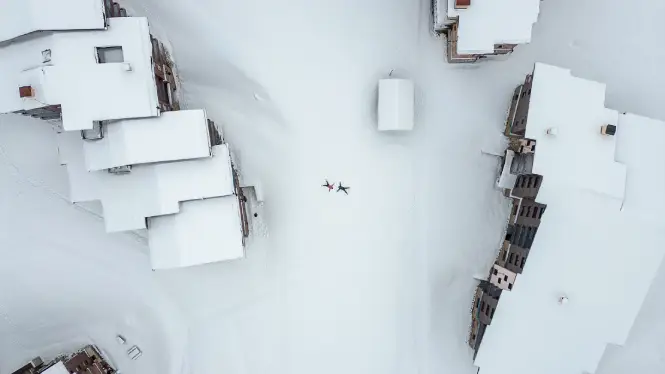
As this area is 2000m and above, you won’t find many tree-lined runs here. There is some good, very accessible tree-lined off-piste around the base of Bellecôte (for example cutting off Bretelle Trieuse under the Colosses chair) or around the Rhodos piste but the vast majority of this sector is very exposed.
Biolley / Aime 2000 in bad weather
Similar to the Bellecôte sector, most of this area is well above the tree line and rather open – however, there are a few stand-out runs here that offer protection. The majority of these runs are served by the high-speed Roche chairlift.
Edmond Blanchoz (formerly Cornegidouille) blue piste: Only the very top of this run is above the tree-line – although you will need to ride the exposed Golf blue piste to access the run. The Edmond Blanchoz (formerly Cornegidouille) goes all the way down to the La Roche base and is one of La Plagne’s longest runs.
Emile Allais red piste: Just like the Edmond Blanchoz (formerly Cornegidouille) above, you’ll need to ride the Golf blue to access. Actually, you’ll also need to go down a short section of the Edmond Blanchoz (formerly Cornegidouille) too – however, after that, it’s tree-lined all the way.
André Martzolf red piste: Same deal as above. You’ll need to ride the Golf and Edmond Blanchoz (formerly Cornegidouille) to access this wooded gem.
Champagny in bad weather
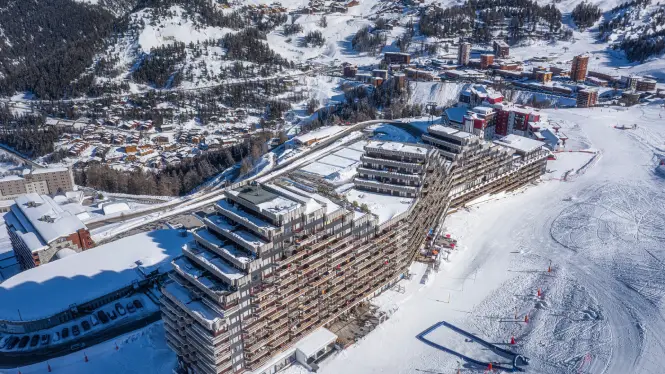
Contrary to what you might read on other La Plagne guide websites, Champagny is not a good area to go on bad viz days. The vast majority of this area is well above the tree line with little in the way of definition. However, there is one exception:
Les Bois black piste (previously red): This fun winding piste is accessible directly off the Champagny gondola and provides banks and tree protection for its entire length. The only thing is, it’ll start feeling a bit repetitive if you’re doing laps.
Glacier in bad weather
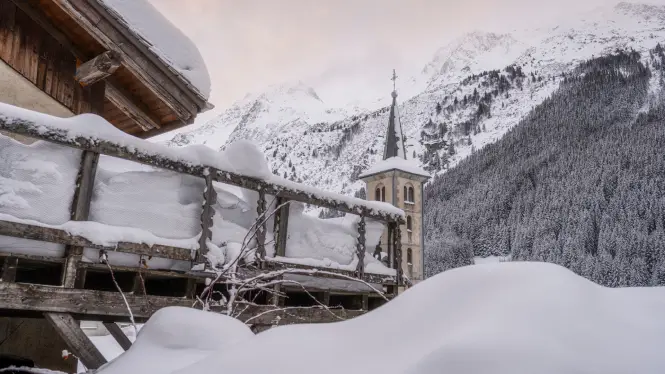
The very last place you want to be in bad weather is the La Plagne glacier. Sure, you might occasionally get lucky with a Mer du Nuages but, in most cases, this area is completely exposed to the elements – so much so, it’s usually the first area to close when the weather pulls in.
Plagne Centre in bad weather
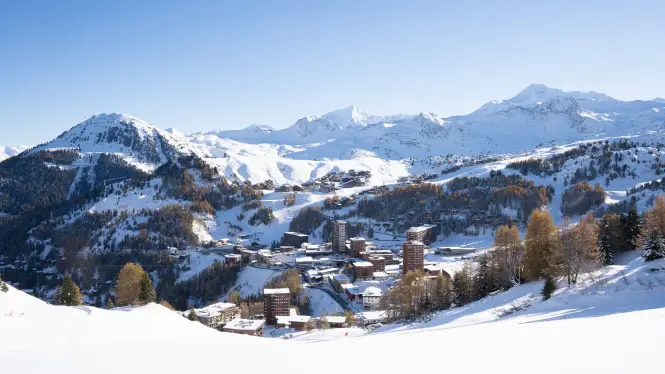
The vast majority of pistes in this sector are exposed for the majority of their length and wide open with very little definition. Again, if you can, this is another area to avoid on snowy, bad viz days. The exception is the very short Les Mines red piste down to Plagne 1800 served by the slow Mélèzes chair – but seriously, who wants to spend a day riding this rather bland piste?
Montalbert in bad weather
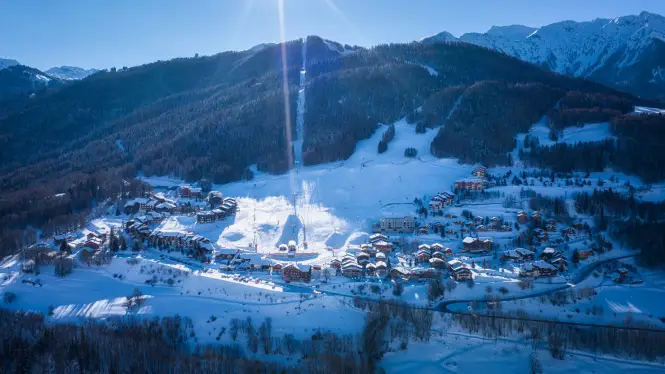
Ok, so if you’ve picked up anything in this article so far, it should already be evident that the Montalbert sector has everything you’re looking for on bad weather, blizzard days. There is a wealth of tree cover on all of Montalbert’s pistes and you can ride the whole area by taking the fast Montalbert gondola to the summit which will whisk you back up in comfort and warmth. Better yet, this area is traditionally one of the quietest areas in La Plagne meaning you can be bagging freshies on and off-piste all day with very few other riders to disturb you.
Montchavin in bad weather
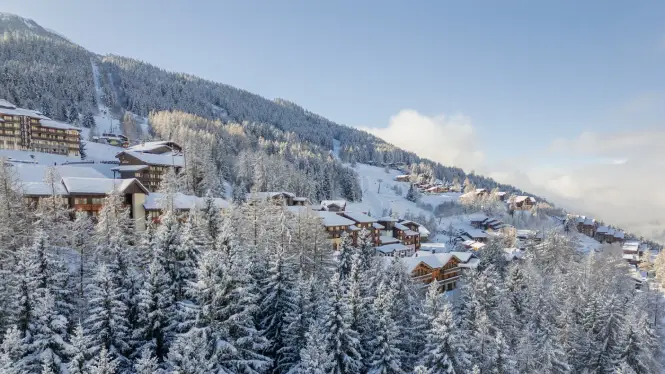
Of all of La Plagne’s areas, Montchavin has the greatest percentage of tree-lined runs – and certainly some of La Plagne’s best off-piste riding – very, very accessible routes through the trees (always hire a La Plagne guide when venturing off the main runs). Note – if you’re accessing from the main La Plagne side, you’ll need to navigate the Replat blue piste, Replat rope tow and the top section of the Mont Blanc piste to reach the trees.
If you want to ensure you stay below the tree line, you’ll want to keep lapping the Montchavin chair, Lac Noir gondola, Plan Bois chair and Pierres Blanches chair. Going higher will put you into more exposed terrain.
There are way too many pistes here to list but the stand-outs include:
Mont Blanc blue piste: Get past the top section (ie after the Dos Rond chair) and the rest is all in the trees on this fun, long piste – the longest run in La Plagne.
Myrtilles blue piste: Even in normal times, this is one of the most fun pistes in La Plagne but, in fresh snow and bad weather, this run absolutely rules. Not only is it normally one of the quietest pistes in Montchavin, it’s also littered with side-hits and options to drop into steep off-piste through the trees (again, take a guide).
Pierres Blanches blue piste: Another great intermediate run cut across the hill through the trees that is normally much quieter than the alternative Mont Blanc run.
Alternate option: stick to the blue runs
Going low only works if conditions allow. Early season, late season and low snow can force you higher. If that applies, stick to blue pistes, they’re far more forgiving in variable snow and flat light.
Plagne Bellecôte best blue pistes
Grande Rochette best blue pistes
Biolley Aime 2000 best blue pistes
Champagny best blue pistes (but really not recommended in bad weather)
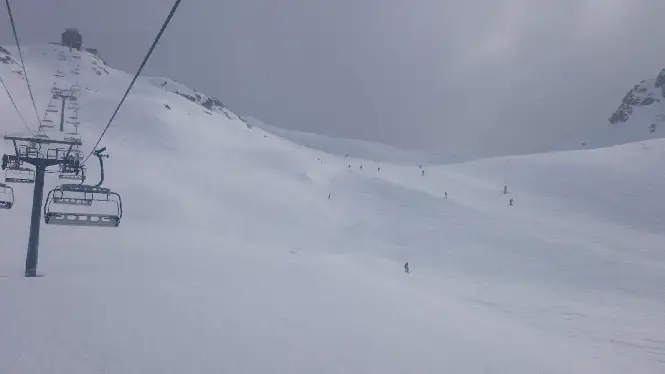
Solutions to stop your goggles from fogging
Flat light is bad enough. Fogged goggles make it worse. Here’s how to reduce fogging without buying new kit:
- Keep your vents clear
Make sure the top and bottom vents aren’t blocked by your helmet, beanie or face mask. No airflow = instant fog. - Clear snow from the vents
Linked to the tip above. After a fall or powder slash, check for snow or ice build-up. Blocked vents stop air moving and increase condensation. - Don’t rest goggles on a snowy beanie
Snow plus warm air inside the lens causes rapid cooling and instant fog. If your beanie’s wet, keep goggles off it. - Avoid resting them on a sweaty head
Warm, damp air rising off your scalp increases humidity inside the lens. If you’re overheating, take them off fully. - Don’t blow air up into them
Hard exhales travel up through your mask and straight into the lens cavity. Breathe steadily and downwards. This is particularly applicable if you’re wearing anything like a facemask around your mouth. - Keep moving
Forward motion forces air through the vents and clears light fog quickly. Standing still makes it worse. - Manage your body temperature
If you’re too hot, you sweat. More heat and moisture inside the goggles = condensation. Open vents, unzip layers and stay cool. - Fit mask and goggles properly
Lay your mask across the bridge of your nose and pull goggles down over it, creating a small airflow gap along the bottom edge. - Use your beanie to create airflow (if not wearing a mask)
Pull your beanie slightly lower on your forehead and sit the top edge of your goggles over it. This opens a seam for warm air to escape.
Want more practical La Plagne info?
If you want more useful info in your feed, follow our Facebook updates:
- Snow and visibility updates when conditions change
- Travel warnings on busy weekends
- New guide drops as we build out the site
La Plagne video guides of season conditions
The video coverage on the iRide YouTube channel shows La Plagne at different times throughout the season, from storm days to bluebird weeks.
If you want the full range, start here: La Plagne videos playlist. Check La Plagne at different stages of the season:
La Plagne in December
La Plagne in January
La Plagne in February
La Plagne in March
La Plagne in April
Plan your trip
Planning your trip? These partners help with booking, transfers and kit hire. We may earn a commission if you use them – at no extra cost to you.
La Plagne ski hire
La Plagne Geneva flights
More La Plagne flights